
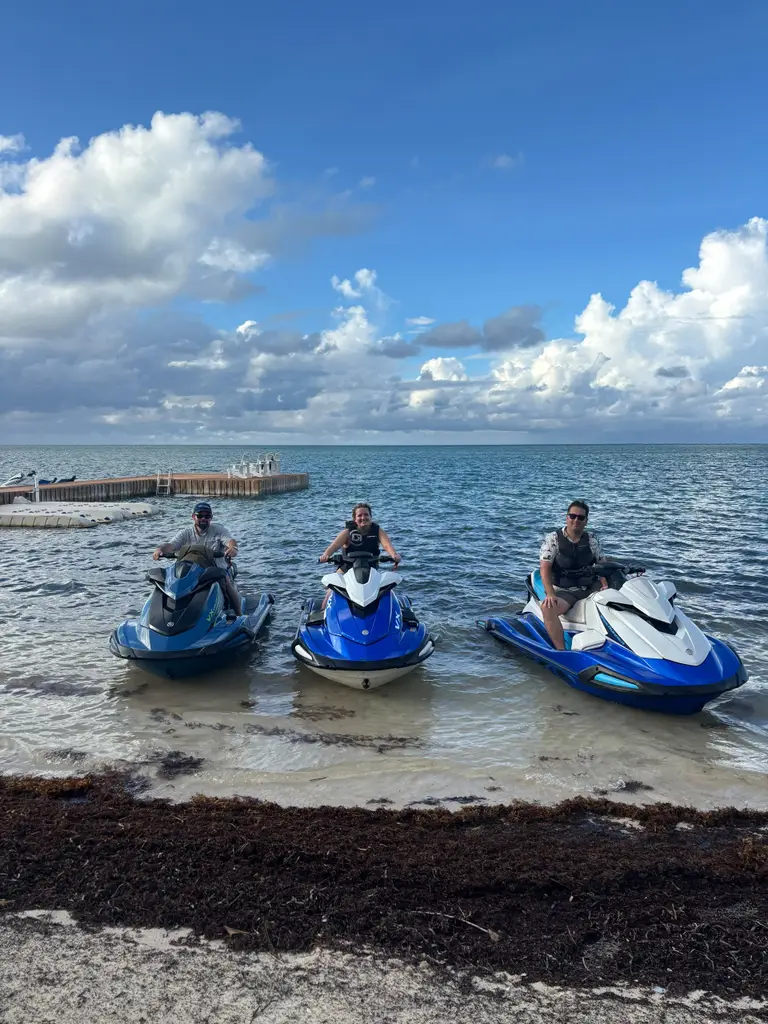
The first squeeze of a jet ski throttle is a vacation moment you remember: clear water ahead, warm Cayman sunshine, and the freedom to cruise toward a quiet stretch of coast. Learning how to ride jet skis is straightforward, but the best first ride starts with a calm approach, a proper orientation, and respect for the water around you.
A personal watercraft is responsive, quick, and a lot of fun. It also handles differently than a car or a boat. Give yourself a few unhurried minutes to understand the controls, follow your guide’s instructions, and build speed gradually. You will be much more comfortable by the time the shoreline is behind you.
How to Ride Jet Skis: Start With the Right Setup
Before leaving the dock or beach, put on a properly fitted life jacket and keep it on for the entire ride. Your operator should explain where the safety equipment is, how the kill-switch lanyard works, where you may ride, and what to do if you fall off. Attach the lanyard to your wrist or life jacket as instructed. If you separate from the jet ski, the engine should shut off.
Take a moment to get your body position right. Sit centered on the seat with both feet planted in the footwells, knees gently bent, and both hands on the handlebars. Keep your shoulders relaxed rather than locking your arms. A loose, balanced stance helps you absorb small waves and stay in control.
If you are riding with a passenger, the more experienced rider should operate the jet ski. The passenger sits directly behind the driver, holds the designated handholds or the driver’s waist, and keeps both feet in place. Agree before you leave that the passenger will avoid sudden movements and will lean with the driver through turns.
Get Moving Slowly, Then Build Confidence
Most jet skis use a trigger-style throttle on the right handlebar. Squeeze it gently to move forward. There is no need to accelerate hard from the start. Begin at a slow, steady speed in the designated departure area, especially near docks, swimmers, other boats, and shallow water.
Look well ahead instead of down at the handlebars or water immediately in front of you. Your eyes lead your body, and your body influences where the jet ski goes. Scan for boats, buoys, floating markers, swimmers, changing water color, and your guide’s signals.
One of the biggest surprises for first-time riders is that a jet ski needs some throttle to steer effectively. The steering nozzle redirects the water jet, so turning the handlebars without power provides limited response. If you need to make a turn, keep a controlled amount of throttle on, look toward the open space where you want to go, and guide the handlebars smoothly in that direction.
Do not make sharp, panicked inputs. A jet ski responds best to smooth steering and a little patience. In a guided group, leave plenty of space between your craft and the one in front of you. It may be tempting to ride close for a photo, but distance gives everyone room to react to wakes and changes in direction.
Practice Turning Before You Need To
Once you have clear water and your guide gives the go-ahead, practice wide, gradual turns at a comfortable speed. Lean slightly into the turn with the jet ski rather than fighting against it. Your passenger should lean with you, not the opposite way.
Turning at higher speeds requires more room than many new riders expect. Plan ahead, reduce speed before a tight area, and never cut across another rider’s path. If you overshoot a turn, keep calm, continue into open water, and make a wider circle when it is safe. Trying to force an abrupt correction is rarely the right move.
In North Sound and other popular Cayman riding areas, conditions can change from glassy water to choppy wakes quickly. Slow down when the surface becomes rough. Standing slightly with bent knees can help experienced riders absorb chop, but beginners often feel more secure seated until they understand how the jet ski responds.
Know Your Speed, Space, and Surroundings
The most enjoyable ride is not always the fastest one. Speed feels very different on the water, particularly when wind, waves, boat traffic, and visibility are involved. Follow all posted zones and your guide’s directions, and slow down near shore, docks, boats, snorkelers, and wildlife.
Keep a generous buffer from other vessels. Boats cannot stop or turn instantly, and their operators may not see a fast-moving personal watercraft approaching from behind. Avoid riding in another boat’s blind spot or cutting across its bow. When crossing a wake, approach at a controlled angle and ease off enough to keep the landing comfortable.
Water color matters in Cayman. Bright turquoise often signals shallow water, sandbars, or reef areas, while darker blue can indicate deeper water. Do not treat color alone as a navigation chart, though. Your local guide and marked route are the best sources for where it is safe to operate. Reefs, coral, and seagrass deserve extra care: keep clear, do not ride through restricted areas, and never attempt to beach a jet ski where it could damage the bottom.
Wildlife encounters are a highlight of an island excursion, but they should happen at a respectful distance. Slow down around rays, turtles, birds, and marine life. Do not chase, circle, feed, or crowd animals. A patient approach is safer for everyone and makes the experience far more memorable.
If You Fall Off, Stay Calm
Falling into the water can happen, especially when turning or crossing wake. It is usually more surprising than serious when you are wearing a life jacket and following the orientation. First, check that you and your passenger are okay, then make sure everyone is clear of the jet ski and other traffic.
Reboard from the rear as instructed during your safety briefing. Most models have a rear step or platform designed for this purpose. Avoid climbing over the side, which can make the craft unstable. Reattach the kill-switch lanyard before restarting, and take a breath before moving away.
If the jet ski has overturned, follow the operator’s directions for rolling it upright. Many models have a marked rotation direction, and turning it the wrong way can allow water into the engine. If you are unsure, stay with the craft, signal your guide or operator, and wait for help rather than guessing.
Choose the Ride That Fits Your Group
A guided jet ski tour is a great choice for first-time riders, families, and visitors who want local knowledge built into the adventure. An experienced guide sets the pace, explains the route, and helps you enjoy favorite stops without spending your vacation trying to figure out where to go. It is an easy way to see places such as Stingray City, Starfish Point, Rum Point, and the wide-open waters of North Sound when conditions and itinerary allow.
A private rental offers more freedom for confident riders who prefer to cruise at their own pace after a thorough safety orientation. The right option depends on your comfort level, the weather, who is riding with you, and how much time you have. A three-hour ride can be perfect for a focused water adventure, while a half-day or customized outing gives your group room to linger and enjoy the scenery.
Sea Breeze Charters & Jet Ski Tours pairs patient instruction with knowledgeable local guides and well-prepared equipment, so beginners can feel supported while experienced guests can make the most of their time on the water.
A Few Habits Make Every Ride Better
Bring water-resistant sunscreen, secure sunglasses, and clothing you do not mind getting wet. Drink water before and during the excursion, especially after time in the sun. Leave loose phones, hats, and valuables behind unless they are secured in a waterproof case or storage compartment.
Most of all, ride within your comfort zone. You do not need to prove anything by going faster than feels right. The best jet ski days are built from easy confidence, good company, and enough awareness to look up and enjoy the incredible water around you. Once you settle into the rhythm of throttle, balance, and open space, your island adventure truly begins.