
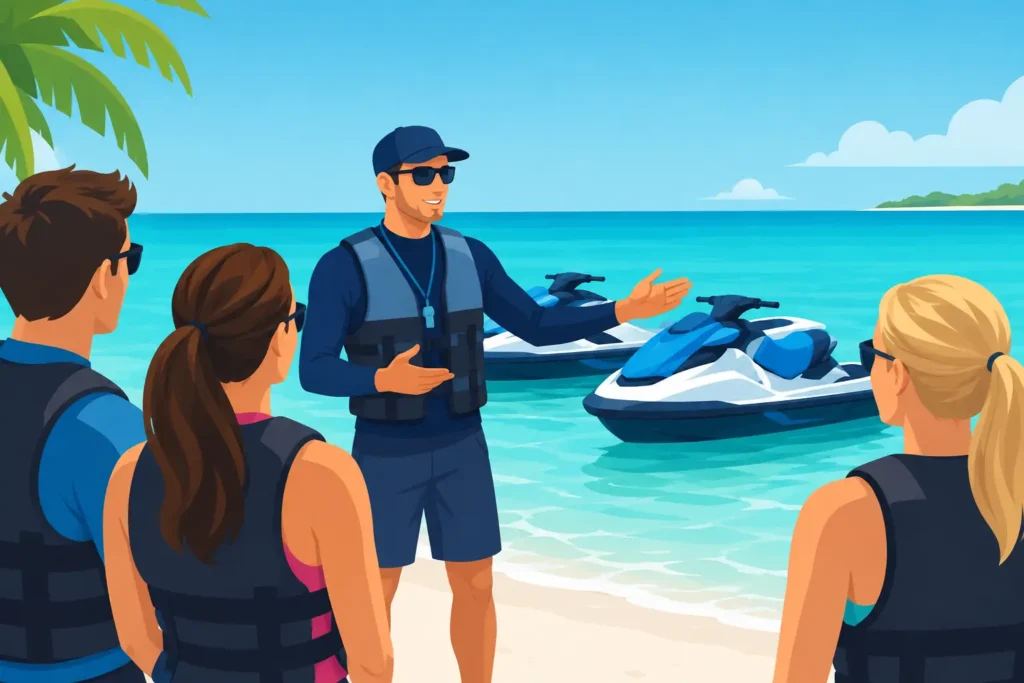
The best jet ski day starts before the engine does. A jet ski safety orientation Cayman guests receive is the moment that turns first-time nerves into real confidence – whether you are heading out with a guide, planning a private ride with friends, or making room in a family vacation for an unforgettable experience on the water.
At Sea Breeze Charters & Jet Ski Tours, the goal is simple: make sure you understand the machine, the route, and the conditions before you cruise across North Sound. You do not need previous personal watercraft experience to enjoy a great ride. You do need to listen closely, ask questions, and ride with the same awareness you would bring to driving somewhere new.
Why a Cayman Jet Ski Safety Orientation Matters
Jet skis are exciting because they are responsive, fast, and give you a front-row view of Cayman’s clear water. Those same qualities mean a short, focused briefing matters. The orientation gives you time to become familiar with the craft while you are still at the dock or in calm, controlled water – not when you are trying to keep up with a group or decide where to turn.
It also puts the day in local context. North Sound is a remarkable place to ride, with open stretches, shallow areas, boat traffic, sandbars, snorkeling spots, and popular stops such as Stingray City and Starfish Point. A guide or rental team will explain where you can operate, which areas require extra caution, and why a beautiful patch of turquoise water is not always a place to speed through.
The briefing is not a test and it is not meant to slow down your vacation. It is a practical reset: here is how the jet ski works, here is how to communicate, and here is how to make smart choices so everyone gets home with great photos and even better stories.
What You Will Learn Before You Ride
A good orientation starts with the basics of the personal watercraft itself. Your instructor will show you where the throttle, steering, engine shutoff, and safety lanyard are located. The lanyard is especially important. It attaches to the rider and is designed to shut off the engine if that rider falls away from the craft.
You will also learn one point that surprises many beginners: a jet ski needs throttle to steer effectively. If you release the throttle entirely while trying to turn, the craft will not respond in the way many new riders expect. The answer is not to panic or make a sudden movement. Keep your eyes on the direction you want to travel, apply controlled throttle as instructed, and make smooth steering inputs.
Your crew will cover passenger positioning as well. The driver should sit securely and maintain both hands on the handlebars. Passengers should hold on properly, keep their feet where directed, and move with the driver through turns rather than leaning the opposite way. It may sound simple, but clear communication between driver and passenger prevents most awkward starts, stops, and sharp turns.
Before leaving, everyone should know how to start and stop safely, how to reboard after entering the water, and what to do if the engine shuts off. Ask for a repeat demonstration if you want one. A patient question at the dock is always better than an uncertain decision offshore.
Safety gear is part of the experience
A properly fitted life jacket is essential for every rider and passenger. It should fit snugly without restricting normal movement. Your crew can check the fit and explain how the equipment is meant to be worn throughout the excursion, not stored on the seat once the ride begins.
Depending on the conditions and trip plan, your instructor may also discuss sun protection, drinking water, secure storage for valuables, and footwear. Cayman sunshine can feel stronger on the water, especially when it reflects off the surface. Sunglasses with a secure strap and reef-safe sunscreen can make a long, bright day much more comfortable.
Rules That Keep the Ride Fun
The most enjoyable jet ski rides are smooth, predictable, and respectful of the people sharing the water. During your orientation, expect clear guidance on maintaining a safe following distance, avoiding wakes when appropriate, and never cutting closely across another rider’s path.
You will be asked to pay attention to your surroundings at all times. That means looking ahead for boats, swimmers, floating markers, shallow water, and other riders before changing direction. It also means avoiding distractions. Save the selfie, the video, and the group conversation for a safe stop rather than trying to create content while operating the jet ski.
Speed is not a fixed decision for the entire day. Open water under calm conditions may allow for a different pace than a busy channel, a docking area, or a place where the water becomes shallow. Your guide will set the tone on a tour, while private renters should follow the route, boundaries, and instructions provided during drop-off. Riding within your comfort level is always the right call.
Alcohol and personal watercraft do not mix. If you plan to enjoy drinks during your vacation, save them for after your time on the jet ski. Clear judgment, quick reactions, and respect for the water are what let the fun last all day.
Guided Tour or Private Rental: What Changes?
Both options begin with safety instruction, but the experience after the briefing is different. On a guided tour, your local guide manages the route and pacing while you focus on the ride, scenery, and stops along the way. This is a great choice for first-time riders, families, and visitors who want to see signature locations without figuring out the route themselves.
A private rental offers more freedom to cruise at your leisure after the orientation and location drop-off. It can be ideal for confident riders, couples looking for time together, or groups that want a flexible window on the water. With that freedom comes more responsibility: follow the agreed boundaries, keep track of time, monitor the conditions, and remain considerate around other vessels and shoreline areas.
Neither option is automatically better. It depends on your experience, the confidence of everyone in your group, and what you want from the day. If your group includes a mix of beginners and seasoned riders, a guided outing often makes the experience feel easier for everyone.
Reading the Water and the Weather
Cayman waters can look calm from shore and feel different once you are farther out. Wind, chop, passing boats, and shifting weather can affect how comfortable the ride feels. Your crew will assess conditions before departure and may adjust the route, timing, or pace to keep the excursion enjoyable.
Listen if a guide asks the group to slow down, spread out, or avoid a certain area. These calls are made for a reason, often because visibility, traffic, or water depth has changed. A flexible mindset is part of being a good rider. The island still delivers incredible views when the plan is adjusted.
If you become uncomfortable while riding, signal your guide or return to a safe, agreed location as instructed. There is no prize for pushing past your comfort zone. Taking a break, switching drivers when allowed, or easing into a slower pace can turn a stressful moment into a much better day.
A Few Smart Habits to Bring With You
Arrive a little early so the orientation does not feel rushed. Wear swim-ready clothing, protect yourself from the sun, and let the team know about any concerns before you leave the dock. If you have never operated a jet ski, say so. If you are traveling with a child or someone who is nervous around open water, mention that too.
Once you are riding, keep your movements smooth, leave room around other water users, and follow the crew’s directions even when the water looks wide open. The best operators are not the loudest or fastest. They are the riders who stay aware, make calm decisions, and leave plenty of space for everyone else to enjoy Cayman’s world-class water.
Your orientation is the first part of the adventure, not a formality to rush through. Give it your attention, settle into the controls, and then enjoy the kind of island day that stays with you long after the saltwater has dried.