
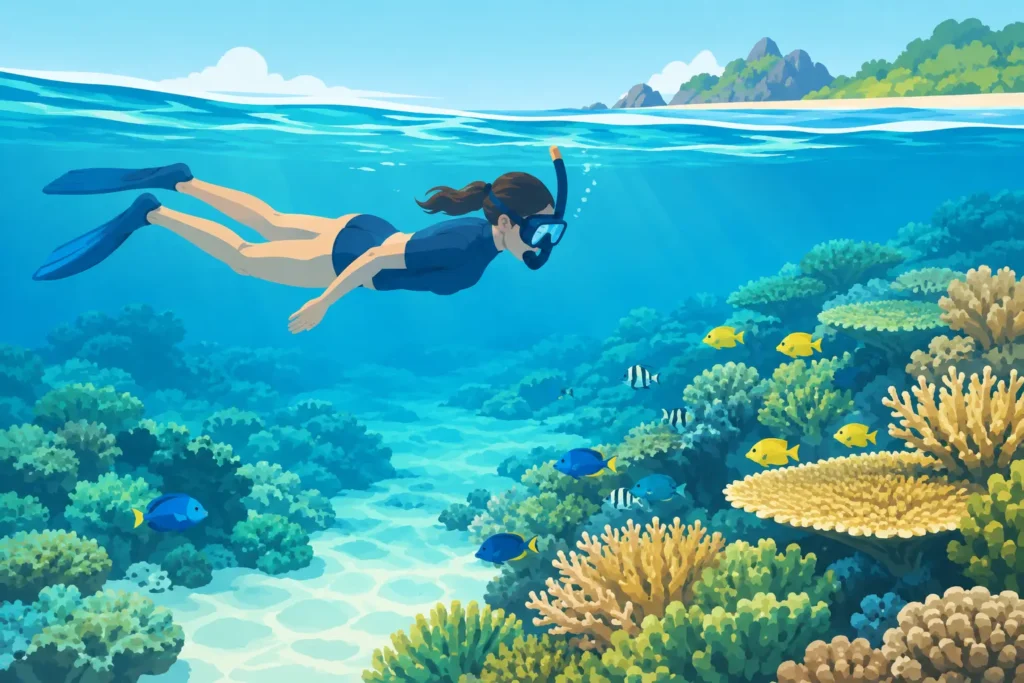
A shallow reef can look close enough to touch, which is exactly why it deserves extra care. Learning how to snorkel shallow reefs is less about swimming hard and more about floating calmly, choosing the right conditions, and giving every coral head plenty of room. Done well, it is one of the most rewarding ways to experience Cayman’s clear water – colorful fish, sea fans, and reef formations are all within easy view.
Start With Conditions That Match Your Comfort Level
Shallow water does not always mean easy water. A reef in three feet of water can be more challenging than a deeper site if wind, waves, current, or surge are pushing swimmers toward coral. Before getting in, look at the surface. Small ripples are normal, but whitecaps, choppy water, or waves breaking over the reef are signs to choose a calmer location or wait for better conditions.
Visibility matters, too. Clear water lets you see the reef’s shape, avoid coral, and spot sandy areas where you can safely pause. If the water is cloudy, you may not see a coral head until you are right over it. That is not the day to squeeze through a tight shallow channel.
For beginners, a guided outing can make the first experience much more relaxed. A local guide can select a protected area, explain where to enter and exit, point out changing conditions, and help you stay focused on the fun rather than figuring out the route.
Get Your Mask, Snorkel, and Fins Right
The best snorkeling gear is gear you barely notice once you are in the water. Your mask should seal comfortably around your face without being painfully tight. Test it by placing it against your face without using the strap and gently breathing in through your nose. If it stays in place, the fit is likely good.
A little water in a mask happens, especially when you are getting started. Practice clearing it in waist-deep water before heading toward the reef. Lift your face slightly, press the top of the mask frame, and exhale through your nose. The same applies to your snorkel: practice clearing it calmly so a small splash does not turn into a stressful moment.
Fins provide helpful propulsion, but long fins are not always the best choice in very shallow areas. They can make it easier to accidentally kick the bottom or coral behind you. Use short, comfortable snorkeling fins and make slow kicks from the hips. Think small and steady, not fast and splashy.
A properly fitted flotation vest or snorkel vest is a smart choice for new snorkelers, tired swimmers, and anyone who wants to relax more fully on the surface. Inflatable snorkel vests are especially useful because you can add a little air for buoyancy without being forced into a fully upright position. The goal is to float horizontally, face down, with no need to stand.
How to Snorkel Shallow Reefs With Good Buoyancy
Good buoyancy is the skill that protects both you and the reef. Coral can be surprisingly close to the surface, and even a light brush from a fin, knee, or hand can break delicate living structures. Give the reef more space than you think you need, especially when waves lift and lower your body.
Start over sand or seagrass away from coral. Float face down, let your arms rest at your sides, and take slow breaths through the snorkel. If you feel yourself sinking, add a little air to your snorkel vest or use a flotation device. If you are too high out of the water, release a small amount of air until you can look down comfortably.
Avoid the temptation to stand when you feel uncertain. In shallow reef environments, the bottom may be coral, sea urchins, or sharp rock rather than sand. If you need a break, signal your buddy, move toward a known sandy area, or roll onto your back and float. Staying calm gives you better control than trying to find your footing.
Move Slowly and Let the Reef Come to You
The most memorable snorkeling moments usually happen when you stop chasing them. Fast kicking can scare fish, stir up sand, and make you breathe harder. Ease into a gentle pace, then pause often. A school of blue tangs, a shy parrotfish, or a camouflaged ray is easier to notice when your body is quiet.
Keep your hands to yourself. It may feel harmless to touch a coral shelf for balance, but coral is alive and can be damaged by contact. Marine animals should also be admired from a respectful distance. Do not feed fish, chase turtles, corner rays, or reach into crevices. You are visiting their home, and a little patience often brings the best views.
Be especially aware of surge near reef edges. Surge is the back-and-forth motion created by waves, and it can move you closer to coral even when you are barely kicking. If you cannot maintain a comfortable buffer, turn around and return to a calmer section. There is no prize for pushing through rough conditions.
Enter and Exit Without Stepping on Coral
A smart entry is one of the easiest ways to protect a shallow reef. Look for a sandy opening, a designated access point, or a boat drop-off that keeps swimmers away from fragile areas. Put on your fins in water deep enough to float, rather than walking across the reef in them.
From shore, shuffle carefully only across clear sand, watching for rocks, urchins, and changing depth. Once the water reaches about waist level, turn away from shore, float, and begin swimming. If you are entering from a boat, listen to the crew’s instructions and use the ladder or entry method they provide. A controlled entry keeps everyone safer and avoids damage below.
When it is time to leave, do not cut across the nearest shallow patch just because it looks shorter. Follow the same sandy route back out. If the return route is difficult because of waves or current, signal for help early rather than trying to force your way through.
Protect Yourself Without Leaving a Trace
Sun protection, hydration, and awareness make a snorkeling session far more enjoyable. A long-sleeve rash guard offers reliable coverage without relying entirely on sunscreen. If you use sunscreen, apply it well before entering the water and choose products carefully. Labels can be confusing, so covering up with clothing and seeking shade before and after your swim are practical extra steps.
Drink water before you get in, even if you do not feel hot. Saltwater, sunshine, and finning can tire you out faster than expected. Snorkel with a buddy, keep track of your location, and agree on simple hand signals before you start. A raised hand can mean stop, while pointing can show something interesting without anyone needing to surface and shout.
Leave shells, coral fragments, and sea life where they belong. Even pieces that appear dead can provide shelter or material for marine life. Bring back only your photos and the stories you will tell later.
Know When to Turn Back
The confident choice is sometimes to skip the reef. Head back if you are short of breath, cold, cramping, struggling to clear your mask, drifting farther than planned, or feeling uneasy about the conditions. Those signals are not failures. They are useful information, and responding early keeps a small problem from becoming a difficult one.
Families should set the pace around the least experienced swimmer. Couples and friend groups often want to see as much as possible, but a shorter, calm snorkel is better than a long swim that leaves someone anxious or exhausted. A professional guide can help match the route to the group, whether you are trying snorkeling for the first time or looking for a relaxed stop between bigger Cayman adventures.
Shallow reefs reward a gentle approach. Float lightly, move slowly, and give the coral room to thrive. With the right guidance and a little care, Sea Breeze Charters & Jet Ski Tours can help turn that first quiet look beneath the surface into one of the standout moments of your island adventure.